
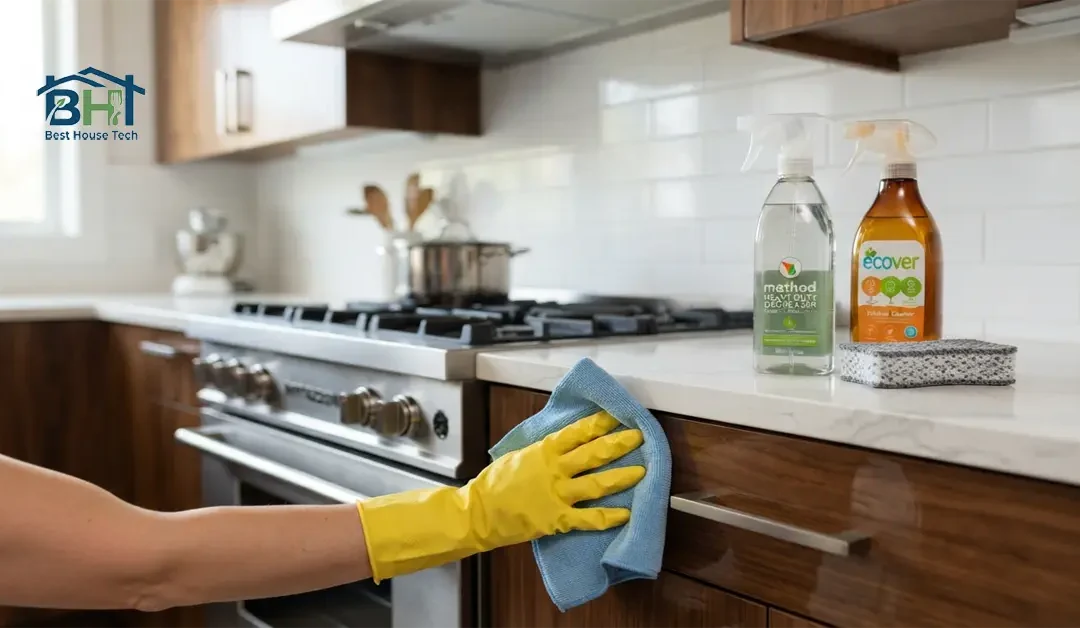
Run your hand along the cabinet next to your stove. If it feels a little tacky, almost like it’s been lightly varnished with something you didn’t put there, that’s grease. It’s not dirt in the usual sense- it’s a thin film that builds up one meal at a time, and by the time you notice it, it’s already had months to bond with the finish.
The tricky part isn’t finding something strong enough to cut through it. Plenty of products can do that. The tricky part is finding something strong enough to remove the grease without stripping the sealant, dulling the sheen, or leaving your cabinets looking worse than when you started.
| Product | Best For | Key Ingredients / Feature | Form |
|---|---|---|---|
| FORTIVO Kit | Deep Detail Cleaning | Precision Brush Included | Spray + Brush |
| 812 Cabinet Cleaner | Painted & Wood Cabinets | Hydrogen Peroxide & Limonene | Clinging Foam |
| Weiman Cabinet & Wood | Maintenance & Sheen | No-Rinse & Almond Scent | Liquid Spray |
| Simple Green Industrial | Versatile Kitchen Cleaning | Neutral pH & Solvent-Free | Liquid Concentrate |
| La's Totally Awesome | Budget-Friendly Heavy Duty | Ammonia & Bleach-Free | Liquid Spray + Refill |
Why Cabinets Get Greasy Faster Than You Think
Grease doesn’t just come from splatter while you’re frying something. Every time you cook, tiny airborne droplets of oil rise with the steam and settle on nearby surfaces — cabinets, especially the ones flanking your range, catch a lot of it. Add in the oil from your hands every time you open a cabinet door, and you’ve got a slow, steady buildup that’s easy to ignore until it’s thick enough to see.
That’s also why the cabinets around your stove and the ones you touch most often (like the ones under your sink) tend to need attention long before the rest of your kitchen.
How to Clean Cabinets with Dish Soap:
- Mix: Add a few drops of dish soap into a bowl of warm water.
- Wipe: Dip a soft microfiber cloth into the solution and wring it out until it’s damp, not dripping. Wipe with the grain if your cabinets are natural wood.
- Target: For a stubborn spot, put a small amount of dish soap directly on the cloth and work it in gently.
- Rinse & Dry: Follow up with a cloth dampened with plain water to rinse off any soap residue, then dry thoroughly with a clean towel.
Pro Tip: Leaving soap residue on cabinets attracts new grime much faster. Always do a final wipe with clean water and dry thoroughly.
Best 10 Degreasers Actually Worth Using on Kitchen Cabinets
Disclosure: As an Amazon Associate, I earn from qualifying purchases. When you click on links on this site and make a purchase, I may earn an affiliate commission at no extra cost to you. For more information, please read my full Affiliate Disclosure page.
We narrowed this list down to products that are either made specifically for cabinets or clearly labeled safe for kitchen surfaces – no engine degreasers, no shop-floor cleaners. Here’s what each one is actually good for.
1. FORTIVO Kitchen Cabinet Cleaner Kit
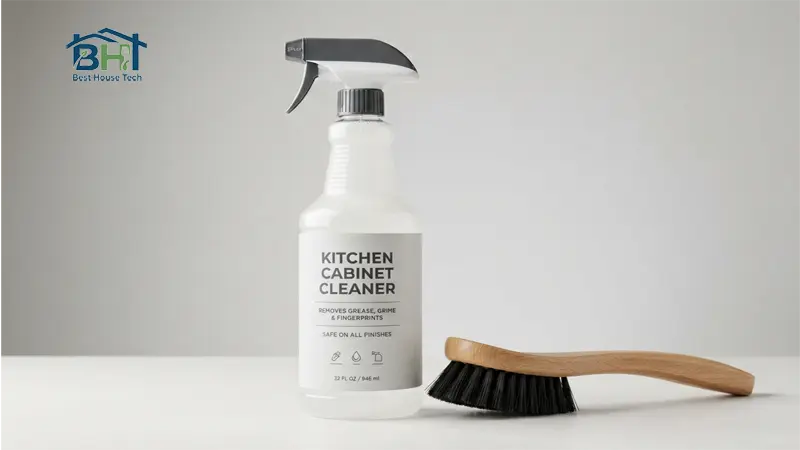
Heavy-duty kitchen cabinet cleaner spray bottle with a precision cleaning brush.
Purpose-built for cabinet care, this kit includes a specialized spray paired with a detail cleaning brush. The formula is safe for wood, painted, laminate, and finished surfaces. Use the spray on a towel for a quick wipe-down, or use the brush to break down built-up grease around hinges and handles.
Pros:
- Specially formulated for indoor cabinetry and furniture, ensuring zero risk of damaging wood finishes.
- Includes a targeted cleaning brush that effortlessly removes sticky grease from cabinet grooves, trim, and handle contours.
Cons:
- Slightly higher price point compared to standard multi-purpose spray cleaners.
Best for: Detailed cleaning around hardware and handles.
2. 812 Kitchen Cabinet Cleaner – Foaming Degreaser
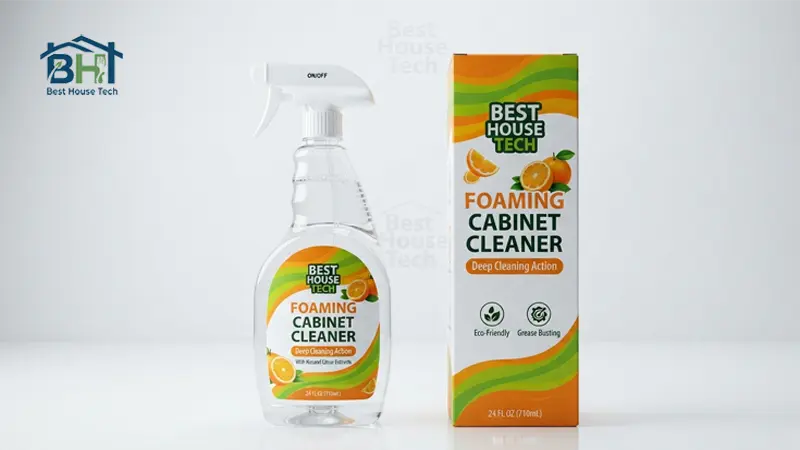
Foaming cabinet cleaner spray bottle with naturally fresh citrus formula for kitchen cabinets.
This foaming formula uses hydrogen peroxide and citrus-derived limonene rather than harsh solvents or bleach. The foam clings to vertical cabinet surfaces instead of running down the door, allowing it time to break down grease before wiping.
Pros:
- Clinging foam formula stays on vertical cabinet doors without running down or dripping onto floors.
- Uses hydrogen peroxide and citrus limonene instead of ammonia or bleach, making it safe for painted finishes.
Cons:
- May require a second application on extremely thick, years-old caked-on grease.
Best for: Painted cabinets and vertical surfaces near the stove.
3. Weiman Cabinet & Wood Clean & Shine Spray
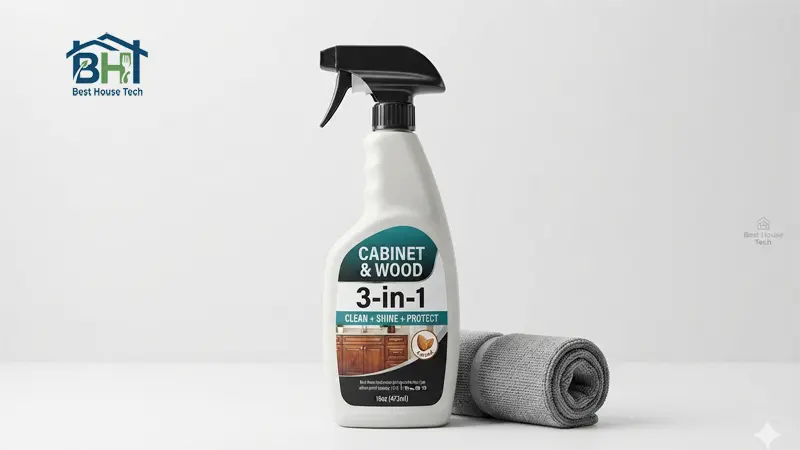
3-in-1 cabinet and wood cleaner spray paired with a microfiber cloth for cleaning and shine.
A convenient no-rinse formula designed for regular maintenance. It lifts light daily dust and grease while restoring a natural shine to wood finishes without leaving a sticky residue.
Pros:
- Convenient no-rinse formula that cleans and restores natural wood shine in a single step.
- Mild almond scent that works well for fast, routine weekly maintenance around cabinet handles.
Cons:
- Lacks the heavy-duty power needed to cut through thick cooking splatter near stove ranges.
Best for: Routine maintenance and restoring luster to wood cabinets.
4. Simple Green Industrial Cleaner and Degreaser (Lemon)
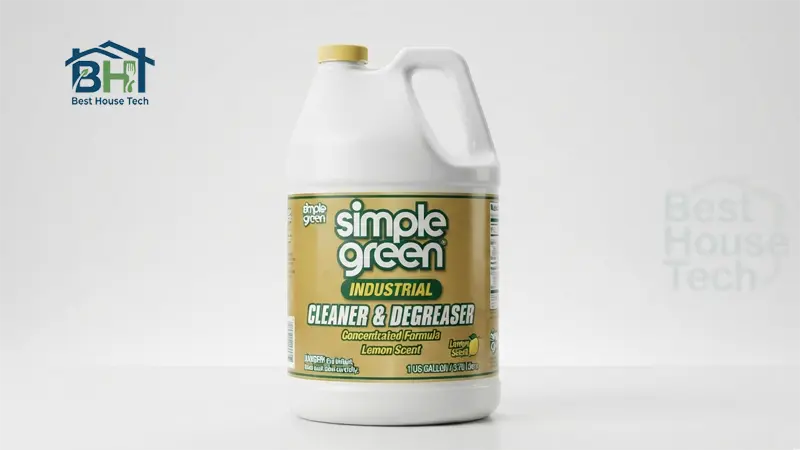
1 Gallon Simple Green concentrated industrial cleaner and degreaser for multi-surface kitchen cleaning.
A pH-neutral, non-caustic, and solvent-free formula that is safe for cabinets, countertops, and tile. Because it is pH-neutral, it cuts through grease without degrading sensitive surface finishes over time.
Pros:
- pH-neutral, non-caustic formula safe for sealed cabinets, countertops, and backsplash tiles.
- Highly economical gallon size that provides long-term utility for general kitchen upkeep.
Cons:
- The subtle lemon scent may still feel slightly chemical to users sensitive to strong fragrances.
Best for: Safe, everyday multi-surface kitchen cleaning.
5. LA’s Totally Awesome All-Purpose Cleaner & Degreaser
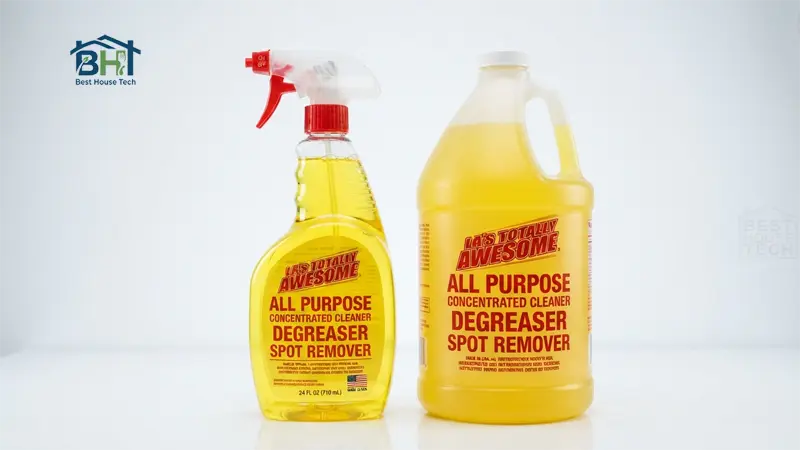
LA’s Totally Awesome all-purpose concentrated cleaner spray with 64 oz refill bottle.
Formulated without ammonia, bleach, or phosphorus, this budget-friendly cleaner effectively cuts through kitchen grease. It is versatile enough for cabinets, countertops, and appliances when properly diluted.
Pros:
- Extremely budget-friendly solution that effectively breaks down grease film on kitchen surfaces.
- Free from ammonia, bleach, and phosphorus to protect surface coatings.
Cons:
- Must be diluted carefully with water before applying to painted or finished wood doors.
Best for: Budget-conscious households looking for a versatile degreaser.
6. Stanley Home Products Degreaser Concentrate
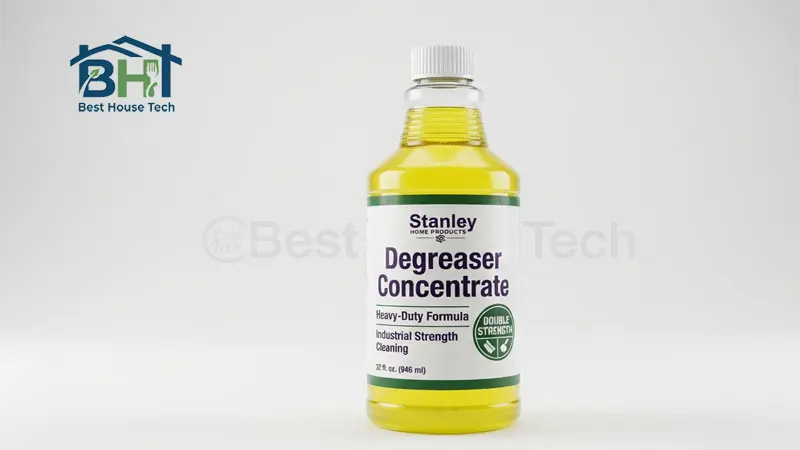
Stanley Home Products 32 fl. oz. double strength degreaser concentrate for kitchen surfaces.
Sold as a concentrated formula, this product gives you full control over strength. A light dilution works for routine cabinet care, while a slightly stronger mix handles heavy kitchen buildup. Always test a small hidden area first.
Pros:
- High-concentration formula yields up to 64 gallons of usable cleaner, saving money over time.
- Allows custom dilution ratios so you can make a milder solution specifically for cabinet doors.
Cons:
- Requires manual measuring and mixing before every use.
Best for: Customizable strength and long-term cost savings.
7. Krud Kutter Original Concentrated Cleaner Degreaser
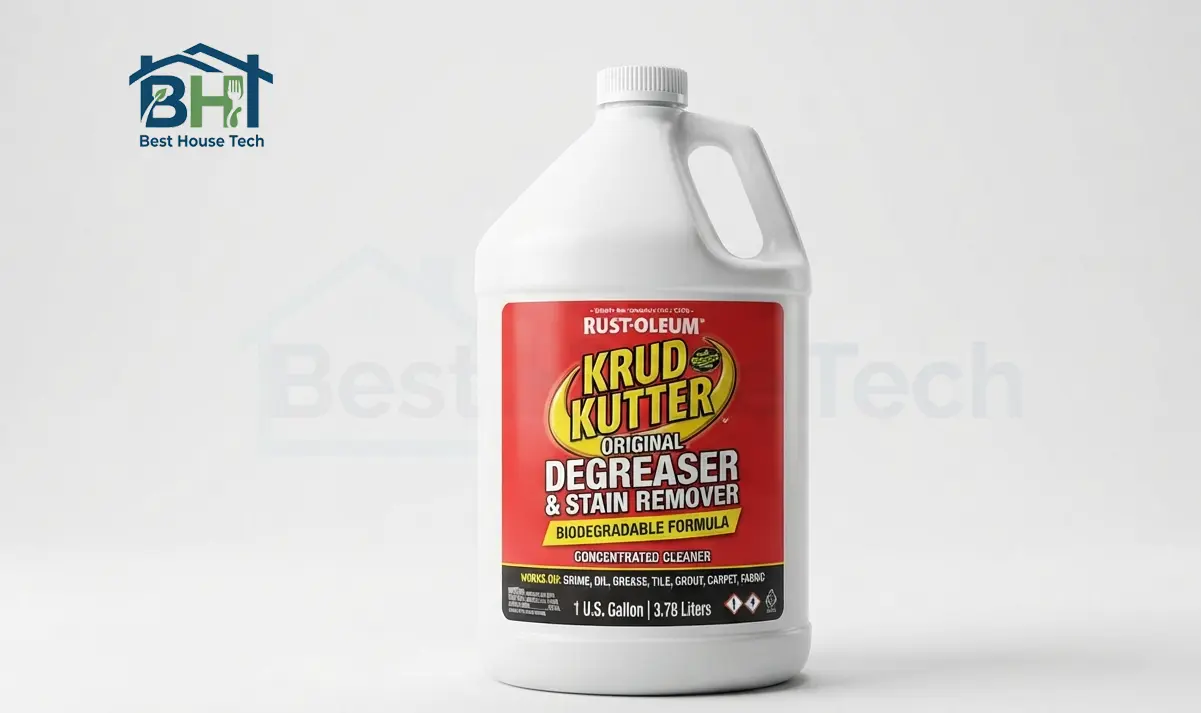
Krud Kutter original concentrated degreaser and stain remover 1 U.S. Gallon jug.
A water-based, non-toxic degreaser that is free of bleach and harsh solvents. Dilute it with water for safe cabinet cleaning, and reserve full strength only for heavy, non-wood kitchen grime.
Pros:
- Water-based, non-toxic formula that removes stubborn, sticky cooking oils quickly.
- Biodegradable and completely free of harsh solvents and toxic fumes.
Cons:
- Full-strength application can dull delicate wood finishes if not diluted properly beforehand.
Best for: Tackling tough, caked-on grease when diluted.
8. Simple Green Pro HD Heavy-Duty Cleaner Concentrate
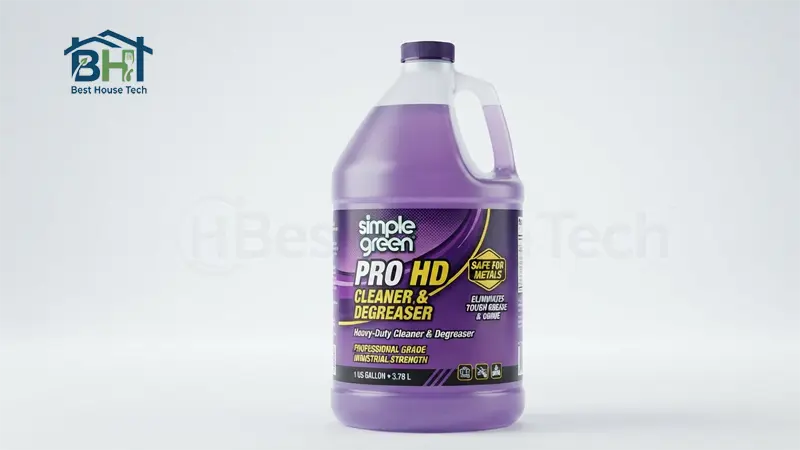
Simple Green Pro HD heavy-duty cleaner and degreaser 1 US Gallon jug.
A professional-grade, non-corrosive cleaner safe for range hoods, stovetops, and cabinet fronts when diluted. It breaks down stubborn grease without damaging underlying plastics or metal trim.
Pros:
- Time-tested, plant-based formula made specifically to clean traditional wood without damaging sealants.
- Preserves natural wood grain while lifting light surface grime and finger oils.
Cons:
- Requires extra physical scrubbing to break down heavy, baked-on range splatter.
Best for: Heavy grease buildup around range hoods and adjacent cabinets.
9. Method Heavy Duty Degreaser
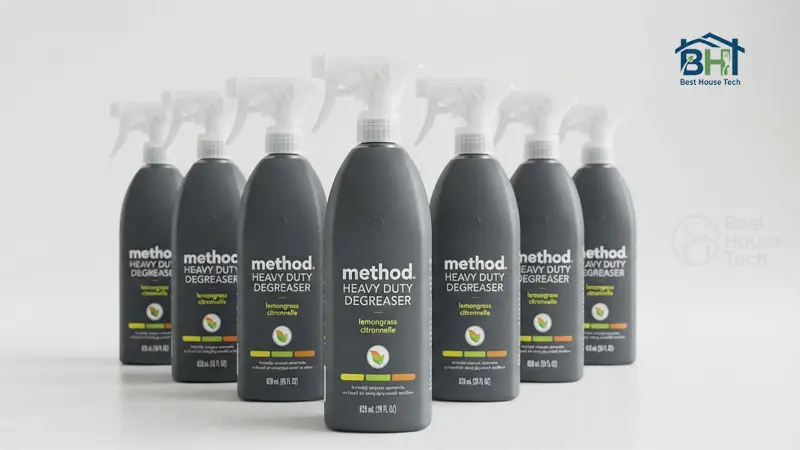
Method heavy duty lemongrass degreaser spray bottles with plant-based grease cutting power.
A plant-based, biodegradable spray designed to break down grease on range hoods, cooktops, and surrounding areas. Use it on grease-source surfaces to stop oil from migrating to your cabinets.
Pros:
- Plant-based, biodegradable cleaner that offers pleasant, low-odor use in closed kitchens.
- Excellent for cleaning surrounding trouble spots like range hoods, stovetops, and cabinet undersides.
Cons:
- Can leave water spots on raw or unsealed wood surfaces if left sitting too long.
Best for: Eco-friendly cleaning of range hoods and stovetops.
10. Dawn PRO Kitchen Surface Degreaser
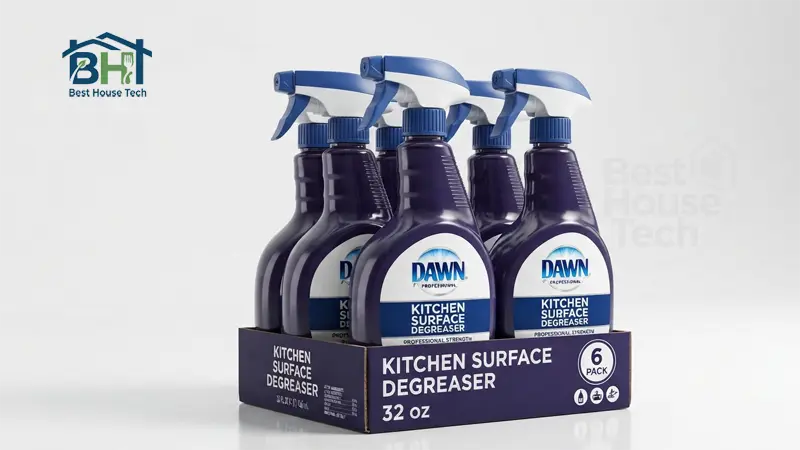
Dawn Professional 32 oz kitchen surface degreaser spray bottles in a 6-pack bundle.
A heavy-duty, ready-to-use commercial degreaser designed for tough kitchen oil and grime. Because of its strength, use it primarily on stainless steel hoods and stovetops, or dilute it significantly and test carefully before applying to painted or finished cabinets.
Pros:
- Infused with beeswax and orange oil to clean light grime while deep-conditioning dry wood.
- Prevents wood cabinets from drying out, cracking, or dulling over time.
Cons:
- Leaves a temporary waxy feel on cabinet doors until the natural oils are fully absorbed.
Best for: Commercial-grade cleaning of heavy grease sources.
What Actually Makes a Degreaser Work?
Grease is oil-based, and oil doesn’t mix with water. A degreaser works by breaking that oil down into tiny droplets that can mix with water, so you can wipe it away instead of just smearing it around. This is done with surfactants, the same class of ingredient found in dish soap, which is why something as ordinary as Dawn can outperform products marketed specifically as “heavy-duty.”
The strength of a degreaser usually comes down to its pH. Most degreasing products sit on the alkaline side, and the more alkaline they are, the more aggressively they cut through grease — but also the more likely they are to damage certain finishes.
The Best All-Around Option: Mild Dish Soap and Warm Water
For routine grease and light-to-moderate buildup, a few drops of dish soap in warm water is genuinely the best place to start. It’s strong enough to break down cooking oil but gentle enough that it won’t eat into lacquer, varnish, or painted finishes. Stubborn oil splatters don’t just stick to cabinet doors—they often coat your cookware as well. For sticky residue on kitchen utensils, read our step-by-step guide on how to remove sticky residue from a stainless steel pan.
What to Avoid (No Matter How Tempting It Looks)
A lot of “powerful” cleaners will remove grease — along with your cabinet finish. Steer clear of:
- Ammonia and bleach-based cleaners: These break down lacquer and painted finishes over time.
- Abrasive powders or scouring pads: Fine for a stainless steel sink, but they will permanently scratch cabinet surfaces.
- Products with silicone or wax: They leave a film that traps grease and dust, making future refinishing nearly impossible.
- Straight alcohol-based cleaners: Can dull or cloud certain lacquers and varnishes.
- Undiluted industrial/automotive degreasers: Formulated for engines and concrete; full-strength use on wood or painted cabinets is a major risk.
Does Cabinet Material Matter?
Yes. Painted and laminate cabinets can generally handle a slightly stronger degreaser without much risk. Real wood, especially anything with an oil finish rather than a hard lacquer, needs a gentler touch. Stick with dish soap or a pH-neutral formula, and avoid soaking the wood with excess water to prevent swelling or warping. Always spot-test any cleaner on a hidden edge first.
While wiping down grease from upper cabinets, grease and grime often settle on your sink hardware and surrounding fixtures over time. Taking time to maintain or upgrade these fixtures ensures a fully refreshed look. Learning how to change a kitchen faucet without calling a plumber can help you easily complete your modern kitchen restoration project.
How to Keep Grease from Coming Back
- Weekly Wipe-Downs: A quick wipe every 1–2 weeks with damp microfiber keeps grease from hardening.
- Use Your Range Hood: Turn on your exhaust fan every time you cook with oil or steam to catch airborne droplets before they settle. If you are deep-cleaning heavy grease around your stove area, you might also want to inspect the surrounding walls. To keep your kitchen protected long-term, check our guide on how to install a kitchen backsplash yourself to shield your walls from future cooking splatters.
- Clean the Filter: Clean your range hood’s grease filter monthly so it continues to pull oil away effectively.